

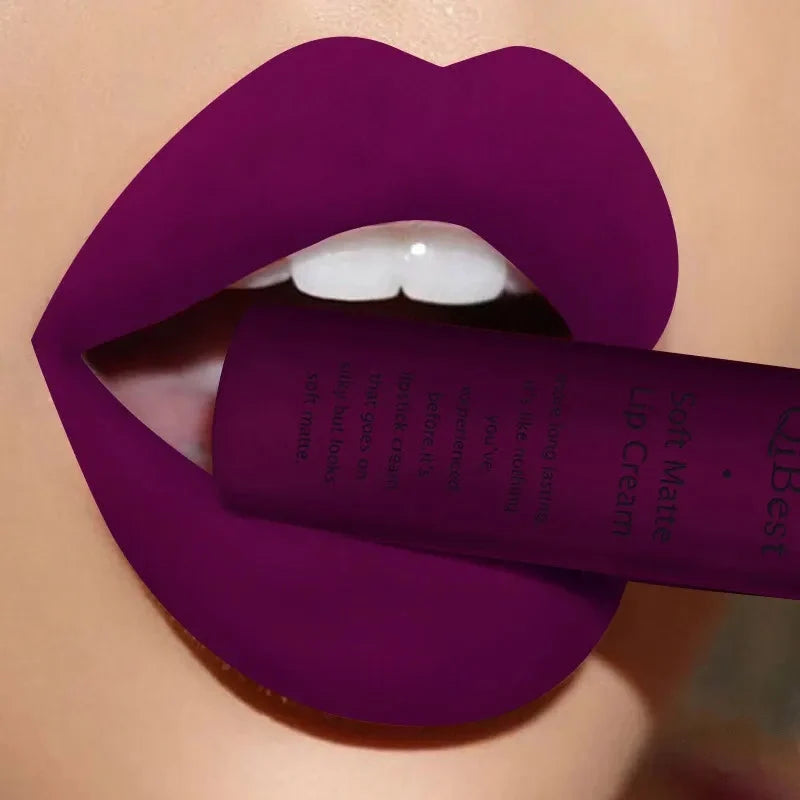
Matte lipstick has a reputation problem. On one person it looks polished and modern; on another it looks dry, cracked, and somehow older than they are. Most of the time, the lipstick is not the problem. Matte formulas have very little slip, so they show exactly what is underneath them — every flake, every dry patch, every fine line. The fix is not a different lipstick. It is five minutes of preparation and a lighter hand when you apply it.
Here is the routine that makes matte lipstick look the way it does in the photos.
Start the night before
Matte lipstick applied over dry lips will never look smooth, so the real work happens before you open the tube.
Gently exfoliate. A soft washcloth with warm water works, or a lip scrub if you have one. The goal is to lift loose, flaky skin — not to scrub your lips raw. If your lips are cracked or sore, skip exfoliating and just moisturize; matte color over broken skin will sting and settle unevenly.
Then apply a plain lip balm before bed. Overnight is when balm does its best work, because you are not eating, drinking, or talking it off. By morning your lips should feel soft rather than coated.
Prep right before you apply
About ten minutes before your makeup, put on a thin layer of lip balm and let it sink in while you do the rest of your face. Right before the lipstick, blot your lips with a tissue. This step is the one most people skip, and it matters: lipstick grips clean, dry lips. Applied over balm, it slides, fades in patches, and never quite sets. You want the moisture IN your lips, not ON them.
If your lip line tends to look fuzzy, trace just inside your natural lip edge with a lip liner close to your lipstick shade, or use a clear lip liner if you own one. Liner gives matte color a border to stay inside, which is what keeps the edge looking crisp in photos.
Apply in thin layers — this is the whole trick
Thick, single-pass application is why matte lipstick cracks. Instead:
- Apply one thin layer over the whole lip. Do not press your lips together yet.
- Blot gently with a tissue. This removes the excess that would otherwise cake into lines.
- Apply a second thin layer, concentrating on the center of the lips where color wears away first.
- Check the edges with a cotton swab and clean up any wobble.
Two thin layers look smoother and feel lighter than one thick one, because there is simply less product sitting on the surface to split when you smile or talk. Avoid the habit of rubbing your lips together to "spread" matte lipstick — with a matte formula that just drags the pigment around and leaves the middle bare.
For an even softer, stained effect, tap the color on with a fingertip instead of the tube. You lose the sharp edge but gain a finish that is very forgiving on textured lips.
Choosing a shade when the shades are numbered
Many affordable matte lipsticks — including our Sexy Velvet Matte Lipstick, which comes in 29 numbered shades at $26.00 — are listed by number rather than by color name. A number tells you nothing on its own, so choose the way makeup artists do: by undertone and depth.
Undertone. Look at the veins on the inside of your wrist in daylight. Mostly blue or purple veins usually mean cool undertones; mostly green means warm; a mix, or veins you cannot pin down, means neutral. Cool skin tends to flatter blue-based reds, berries, and mauves. Warm skin tends to flatter brick reds, corals, and warm browns. Neutral skin can wear most of the range, which makes experimenting cheap and low-risk.
Depth. Within your undertone, pick a depth that has some contrast with your skin. Very light shades on fair skin can wash you out; very deep shades on fair skin are a deliberate statement, not a mistake — just know which one you are choosing. On deeper skin, mid-tone and deep shades read rich rather than harsh, and very pale shades need a liner to look intentional.
Use the photos, not the number. On a numbered shade list, compare the shade photos side by side and sort them in your head into light, medium, and deep. Then narrow by undertone: does the color lean pink-blue or orange-brown? Those two filters will get you to the right neighborhood of the 29 shades faster than guessing from a number ever will. And if you are between two, remember that matte color usually dries down a touch deeper than it looks going on — the lighter of the two is the safer everyday pick.
Five mistakes that make matte lipstick look bad
- Applying it over dry, flaky lips. No formula can hide texture it is clinging to. Prep first, always.
- Skipping the blot. Excess product is what cakes and cracks. Blot between layers.
- One thick coat. Two thin coats beat one thick coat for smoothness and comfort, every time.
- Rubbing your lips together. It moves matte pigment instead of setting it. Press gently against a tissue instead.
- Reapplying over old lipstick all day. Fresh matte over hours-old matte builds up crusty layers. For a touch-up, remove what's left in the center, add a whisper of balm, blot, and reapply one thin layer.
Taking it off
Matte pigment holds on, so do not scrub. Massage a little lip balm or any oil-based cleanser over your lips, wait thirty seconds, and wipe with a soft cloth or cotton pad. The color lifts without the friction that leaves lips sore the next morning — which means tomorrow's application starts smooth.
The short version
Smooth matte lipstick is 80% prep: exfoliate gently, moisturize, blot, then two thin layers with a blot in between. Get those steps right and the finish takes care of itself.
If you are ready to pick a shade, the Sexy Velvet Matte Lipstick gives you 29 numbered shades to sort by undertone and depth, and US orders ship free, arriving in 7–10 business days. You can also browse the rest of our color range in the Makeup collection.


